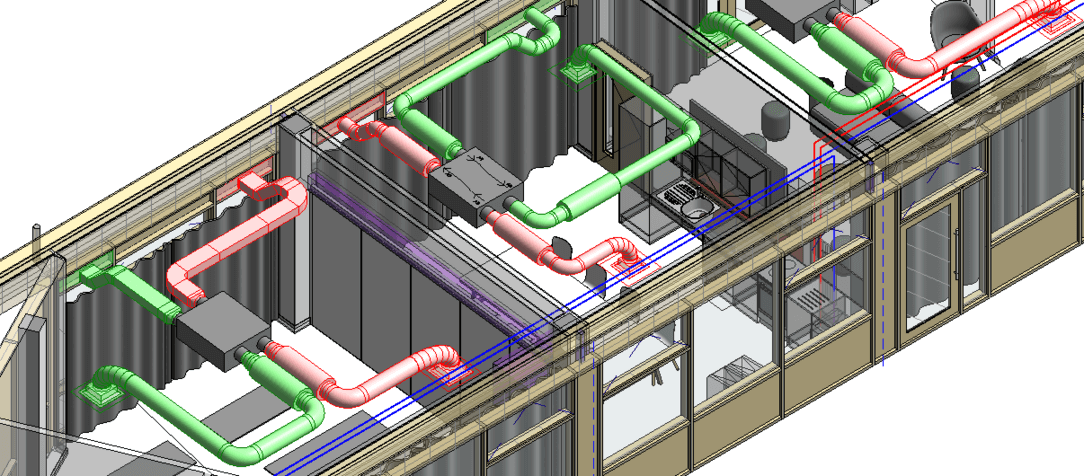
An air source heat pump transfers heat from the outside air to water. This in turn heats rooms in your home via radiators or underfloor heating. It can also heat water stored in a hot water cylinder for your hot taps, showers, and baths.
An air source heat pump (ASHP) is an energy-efficient heating system that extracts energy from the air. Despite requiring electricity to operate, they generate more heat than the amount of electricity they consume, resulting in potentially lower running costs compared to traditional heating systems. In simple terms, they produce more heat than the electricity they use.
Unlike ground source heat pumps, which need large outdoor spaces, ASHPs require significantly less space, making them a more attractive option for many businesses with budget and space constraints.
ASHPs differ from conventional boilers by producing heat at lower temperatures over extended periods. There are two primary types of air source heat pumps: ‘air-to-air’ and ‘air-to-water’.
Air-to-Air
Air-to-air heat pumps use a warm air circulation system to distribute heat throughout a building. These pumps can provide heating, or both heating and cooling if equipped with a reversing valve. However, this system does not supply hot water. Air-to-Air heat pumps are commonly found as the main energy source of air conditioning systems, whilst Air-to-Water (see below) are more commonly found in heating and hot water systems.
Air-to-Water
In contrast, air-to-water heat pumps extract renewable heat from the outside air and convert it into hot water, providing both heating and hot water. This type of system is more commonly used in the UK.
How does an Air Source Heat Pump Work?
Step 1 – Energy Extraction: An outdoor heat exchanger filled with refrigerant extracts energy from the air.
Step 2 – Refrigerant Heating: The absorbed energy heats the refrigerant, causing it to transform from a liquid into a vapor.
Stage 3 – Compression: The vapor moves through a compressor, which increases its temperature further.
Stage 4 – Heat Transfer: The hot, compressed vapor passes through another heat exchanger surrounded by cool air or water. The cool air or water absorbs heat from the refrigerant and circulates around your building to provide heating and hot water.
Stage 5 – Cycle Renewal: As the refrigerant transfers heat to the air or water, it cools down and returns to a liquid state, ready to start the cycle again. 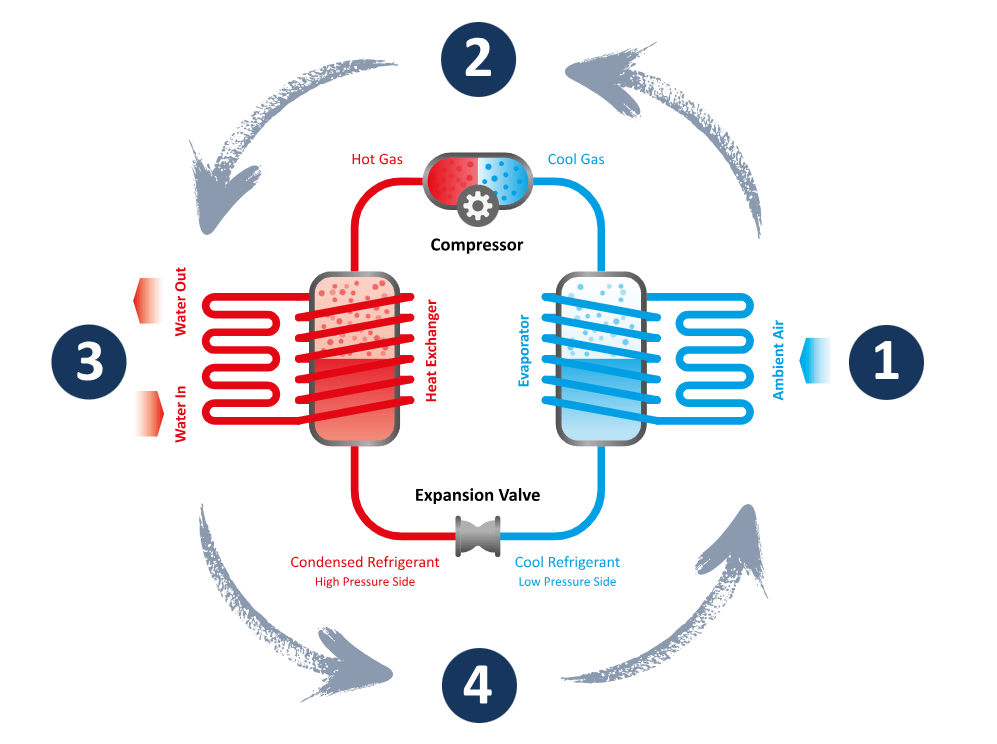
Advantages of using a heat pump
- High energy efficiency – Heat pumps are very efficient systems when used and designed correctly, therefore reducing your running costs and improving the overall efficiency of your building and reducing your carbon footprint.
- Funding – Funding may be available for buying your heat pump(s) for your project which could benefit you finanically.
- Low maintenance – Heat pumps are generally low maintenance items (again, when designed and installed correctly!)
- Selection Variety – As heat pumps have grown in popularity, there are hundreds (if not thousands) of heat pump models, meaning that they will suit pretty much all projects whether that be new build or refurbishment.
Disadvantages of using a heat pump
- Spatial Requirements – As they need to be located externally, this means you will need to find a safe space to locate them outside.
- Lower flow temperatures – Whilst this is also a positive and is part of the impact of the lower running cost, lower flow temperatures mean bigger radiators. An alternative to this would be using underfloor heating, but there are a few other options and always depends on your project and why it is always best to speak to your consultant.
- Fabric first approach – This is specifically important when using a heat pump for retrofit projects, if you are wanting to use a heat pump for a refurbishment, it is extremely important that we look at the building fabric first and whether this needs to be improved.. which could be costly!
- Electrical Input – Although they produce more heat than the energy they use, it still means that they generally use more electricity so always check your current supply or ensure your new supply is sized adequately.
So, what do we think?
Whether you like it or not, heat pumps are the future and aren’t going anywhere anytime soon. We are already starting to see a huge benefit in using these systems especially as technology on them is improving and they are becoming even more efficient and easy to specifiy for all different types of projects.
For new build projects both residential and commercial it is a no brainer and new regulations make it very difficult not to use them for new builds with the new energy targets we have to meet so we always aim to use them wherever we can.
If you are looking for a cost-effective, energy efficient heating and hot water system and have adequate outdoor space, then an an air source heat pump is likely the right fit for you.